Cognitivism
in Action
An in-depth exploration of the internal mental processes of learning. Understanding how the mind receives, organizes, stores, and retrieves information.
Core Principles
Cognitivism focuses on the inner mental activities – opening the "black box" of the human mind is valuable and necessary for understanding how people learn.
Mental Processes
Learning is fundamentally an internal cognitive event, not just a change in observable behavior.
Cognitivism represents a paradigm shift from Behaviorism by opening the "black box" of the mind. It posits that learning involves complex internal mental activities such as perception, attention, memory, language, and problem-solving.
Active Construction
Learners are not passive recipients of information but active architects of their own understanding.
Contrary to the view of learners as "blank slates" (tabula rasa), cognitivism asserts that individuals actively construct knowledge. They do this by filtering new information through their existing cognitive structures.
Information Processing
The human mind operates analogously to a computer, with distinct stages for input, processing, and output.
The "Computer Metaphor" is central to cognitivism. It suggests that the mind receives information (input), performs operations on it to change its form and content (processing), stores the information (storage), and generates a response (output).
Schema Theory
Knowledge is organized into networked mental structures called schemas, which are dynamic and adaptable.
A schema is a cognitive framework that helps organize and interpret information. Jean Piaget identified two key processes in schema adaptation: Assimilation and Accommodation.
Meaningful Learning
True learning occurs when new information is substantively connected to relevant concepts in the learner's cognitive structure.
David Ausubel distinguished between Rote Learning and Meaningful Learning. Meaningful learning happens when the learner consciously relates new knowledge to relevant concepts they already possess.
Metacognition
The executive control of the mind: thinking about one's own thinking and regulating one's learning.
Metacognition involves awareness and regulation of one's own cognitive processes. It includes planning how to approach a learning task, monitoring comprehension, and evaluating progress.
Information Processing Model
An interactive visualization of how the human mind encodes, stores, and retrieves information.
Interactive Information Processing Model
Click on each stage to explore the cognitive flow.
Sensory Memory
0.5 - 3 Seconds
Working Memory
15 - 30 Seconds
Long-Term Memory
Indefinite
Sensory Memory
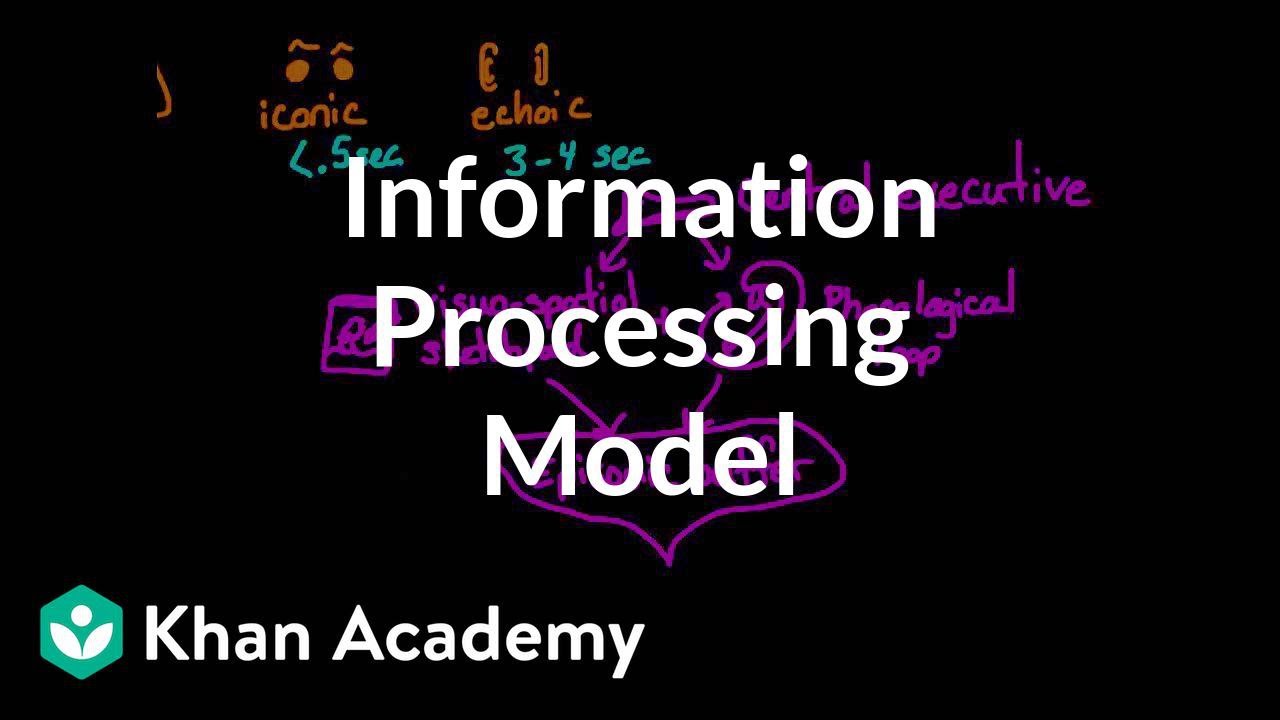
The entry point for all information. It holds sensory impressions briefly. Iconic (visual) lasts <0.5s, Echoic (auditory) lasts 3-4s. Information not attended to is lost via decay.
Sensory Memory
The initial stage that holds sensory information for a very brief period (seconds). It acts as a buffer for stimuli received through the five senses.Attention is the key process that moves information from here to Working Memory.
Working Memory
Also known as Short-Term Memory. It is the active processing center where conscious thinking occurs. It has limited capacity (7±2 items) and duration (approx. 20 seconds).Rehearsal and Chunking are strategies to maintain information here.
Long-Term Memory
The permanent storage system with theoretically unlimited capacity and duration. Information is organized in schemas. Encoding moves info in, and Retrieval brings it back to Working Memory.
Pedagogical Applications
Translating cognitive theory into effective classroom strategies for English Language Teaching.
1Organizing Information
Since working memory is limited, teachers must present information in an organized, structured manner to facilitate processing and prevent cognitive overload.
Classroom Strategy: Graphic Organizers
Use mind maps, Venn diagrams, and flowcharts to visually display relationships between concepts. This helps students build schemas and reduces the cognitive load of processing dense text.
2Activating Prior Knowledge
New learning must be anchored to existing knowledge. Teachers should explicitly help students recall relevant prior learning before introducing new topics.
Classroom Strategy: K-W-L Charts
Start a lesson by asking students what they Know, what they Want to know, and later, what they Learned. This primes their cognitive structures to receive new information.
3Promoting Metacognition
Encourage students to think about their own thinking. This helps them become self-regulated learners who can monitor their own comprehension.
Classroom Strategy: Think-Alouds
Model your thinking process while reading a difficult text or solving a grammar problem. Then, have students do the same in pairs, verbalizing their thought process.
4Enhancing Retention
To move information to long-term memory, learners need to actively manipulate it. Passive listening is rarely sufficient for deep learning.
Classroom Strategy: Elaborative Rehearsal
Ask students to explain a concept in their own words, give an example from their own life, or teach it to a peer. This creates multiple neural pathways to the information.
Prominent Theorists
Key figures who shaped the cognitive revolution in psychology and education.
Jean Piaget
Cognitive Development
Proposed stages of cognitive development and the processes of assimilation and accommodation.
Lev Vygotsky
Social Constructivism
Emphasized the social context of learning and the Zone of Proximal Development (ZPD).
Jerome Bruner
Discovery Learning
Advocated for discovery learning and the spiral curriculum. Coined the term 'scaffolding'.
Robert Gagne
Conditions of Learning
Identified the 9 Events of Instruction and different types of learning outcomes.
Video Resources
Curated visual explanations of cognitive theories.


Knowledge Check
Assess your understanding of Cognitivism concepts.